
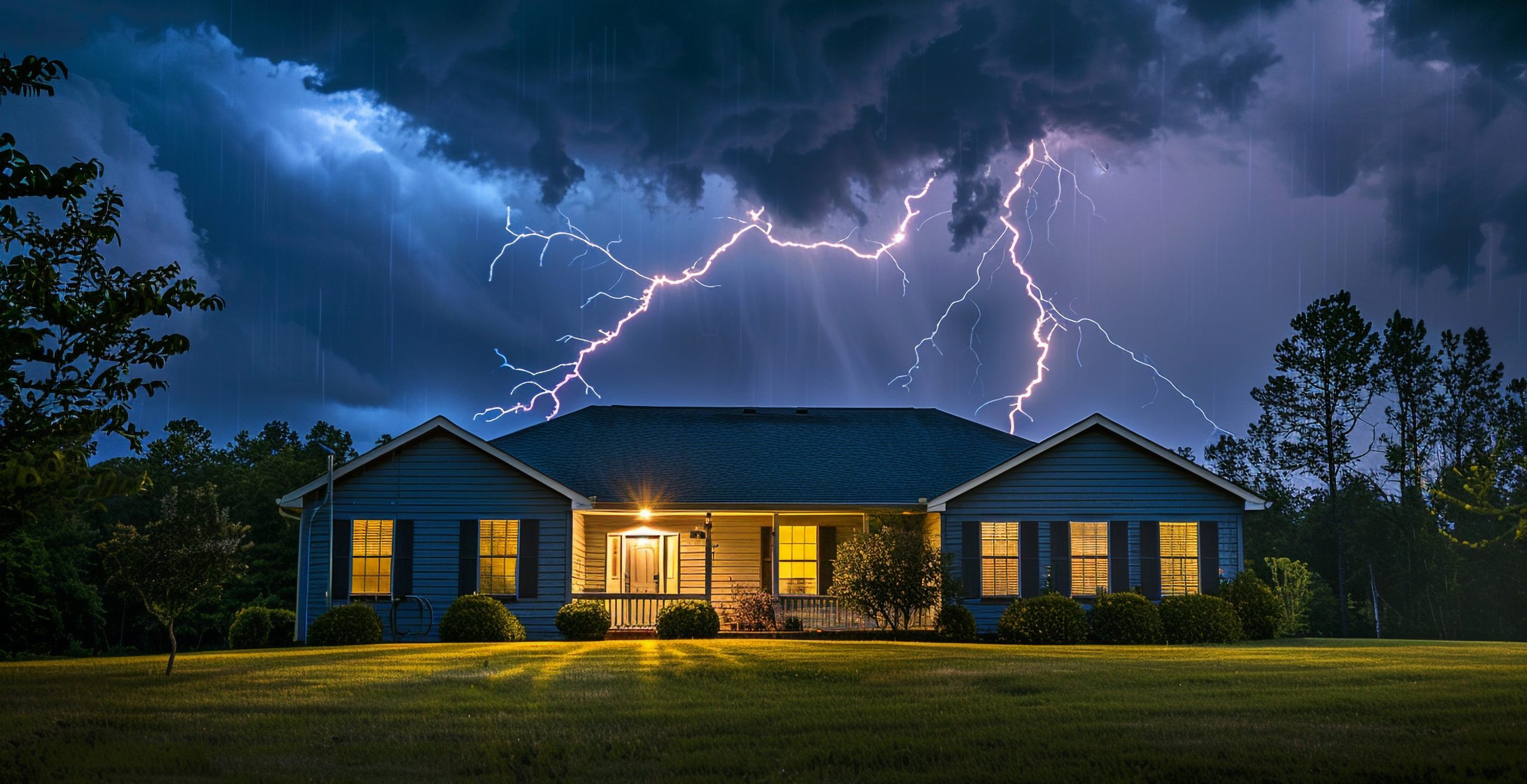
Every storm season brings a surge of damage assessments, insurance conversations, and re-roofing decisions. For contractors advising clients on material selection, that window is an opportunity to recommend a long-term solution rather than a like-for-like replacement.
This resource covers what to generally look for after a storm, how common roofing materials hold up under storm conditions, and why metal roofing deserves a prominent place in that recommendation.
IMPORTANT: This guide is for general informational purposes. Always refer clients to a licensed roofing professional for formal damage assessments, and consult local building codes and manufacturer specifications for all installation requirements.
After the Storm: What to Look For
Post-storm roof assessments generally fall into four categories. Understanding each helps contractors communicate scope clearly to property owners — and identify where metal roofing’s advantages are most relevant.
Hail Damage
Hail is one of the most common and most contested categories in storm damage claims. Damage ranges from granule loss and surface bruising on softer materials to denting and coating compromise on metal. The key question is always whether damage is cosmetic or functional — a distinction that varies significantly by material.
METAL ADVANTAGE: Class 4 impact-rated metal panels are engineered to sustain significant hail strikes without functional failure. Most competing materials carry no equivalent impact rating.
Wind Damage
Wind events stress the roof perimeter first — ridges, eaves, and rakes are the highest-risk zones. Material blow-off, lifted sections, and displaced flashing are the most common findings. The attachment method and profile geometry of the roofing material determines how much uplift force it can resist.
METAL ADVANTAGE: Interlocking metal panel systems eliminate the exposed leading edge that makes shingle systems vulnerable to wind uplift. Mechanically fastened profiles perform well in high-wind regions and are tested to demanding wind standards.
Water Infiltration
Water damage is often a secondary consequence of wind or hail compromise rather than a direct storm impact. Once a roof surface is breached, how quickly moisture infiltrates — and how much damage it causes before it’s discovered — depends heavily on the underlying material’s porosity and how it degrades under saturation.
METAL ADVANTAGE: Metal is non-porous and sheds water rapidly. Unlike organic materials that absorb moisture and deteriorate from within, metal maintains its surface integrity even after impact events.
Visible Surface Damage
Beyond specific storm categories, a general visual assessment of the roof surface will reveal wear, cracking, granule loss, or displacement that may have been accelerated by the storm. This is also where material type most directly affects how easy it is to identify and scope damage accurately.
METAL ADVANTAGE: Damage on a metal roof is unambiguous — dents and displaced panels are clearly visible. On asphalt, subsurface bruising and granule loss are frequently missed during standard visual inspections, leading to underestimated scope and recurring issues.
The Case for Metal: Five Reasons to Recommend It
When a property owner is facing a re-roofing decision after storm damage, a like-for-like replacement is rarely the only option — or the best one. Here’s why metal roofing merits a place in that conversation.
1. It’s Built to Outlast the Next Storm
Metal roofing systems are engineered for long-term durability in demanding weather environments. Where asphalt shingles may require replacement every 15–30 years — often following another storm cycle — a properly installed metal roof is designed to perform for 40–70 years with minimal maintenance. For property owners tired of recurring damage and recurring costs, that longevity is a compelling value proposition.
2. Impact Resistance Is Engineered In
Class 4 impact resistance — the highest rating under industry testing standards — is achievable with metal roofing in ways it simply isn’t with most competing materials. This rating reflects the panel’s ability to absorb significant hail impact without functional breach. For clients in hail-prone markets, this is a specification decision with measurable long-term consequences.
3. Wind Performance Is Structural, Not Incidental
Metal roofing’s wind resistance isn’t a byproduct of material weight — it’s a function of how the system is designed and attached. Concealed fastener systems, interlocking panel profiles, and tested uplift ratings give metal roofing a wind performance profile that most other materials can’t match on a system level.
4. Insurance Economics Work in the Client’s Favor
In many markets, Class 4 impact-rated roofing qualifies property owners for meaningful insurance premium reductions. Depending on the carrier and region, these discounts can offset a meaningful portion of the cost differential between metal and asphalt over time. Educating clients on this dynamic — and encouraging them to verify with their carrier — positions you as a trusted advisor, not just a contractor.
5. Lower Lifecycle Cost Than It Appears
The upfront cost of metal roofing is higher than asphalt. That comparison shifts considerably when you factor in service life, reduced maintenance intervals, and the avoided cost of one or more future re-roofing cycles. For property owners planning to stay in the building for 10 or more years, the lifecycle math often favors metal — and that’s a conversation worth having.
Let’s Talk Materials
Champion Metal Supply works with roofing contractors to source quality metal roofing products across a range of profiles, gauges, and price points. Whether you’re specking a single-family storm replacement or a larger commercial project, our team can help you find the right product for the job.
Reach out to our team to discuss your next project, review current inventory, or request pricing for your bid.