
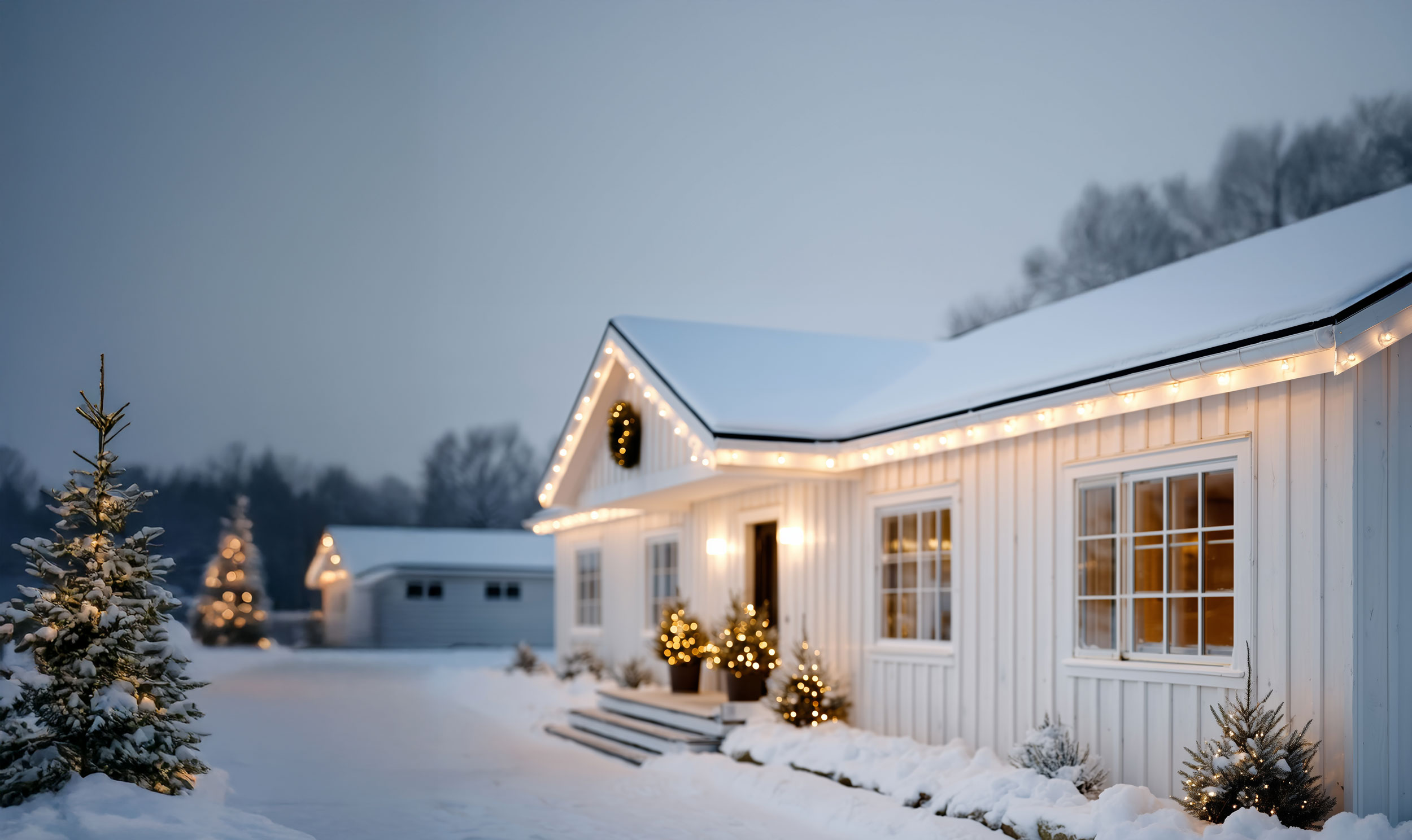
One of the biggest advantages of metal roofing is how efficiently it sheds snow. But that same advantage can become a hazard if snow releases all at once. Snow guards are essential for Midwest homes and businesses — especially where heavy snow and ice are common.
In this guide, we’ll walk through the types of snow guards, when to use each, and how to design the right layout for your roof.
1. Why Snow Guards Matter
Snow guards control how snow and ice melt, slide, and release from your roof. Without them, large sheets can suddenly slide off, causing:
- Damage to gutters
- Broken landscaping
- Harm to vehicles or lower roofs
- Safety hazards near entry doors and walkways
A properly designed snow retention system ensures controlled release, protecting both people and property.
2. The Main Types of Snow Guards
Here are the most common snow guards available for metal roofing. (Once you confirm your exact inventory, we can match these to CMS SKUs.)
A. Pad-Style Snow Guards
Best for: Ag Panel, PBR Panel, exposed-fastener systems
Features:
- Individual pads spaced in staggered rows
- Creates friction that slows snow movement
- Available in polycarbonate or metal
- Budget-friendly and easy to install
These are ideal for agricultural buildings, garages, and barns where metal panels have exposed fasteners.
B. Clamp-On Snow Guards
Best for: FF100, FF150, SS200 Standing Seam
Features:
- Non-penetrating design
- Attaches to the male leg of the panel using set screws
- Preserves panel warranty
- Strong retention capability
Perfect for residential and commercial standing seam roofs.
C. Bar-Style Snow Retention Systems
Best for: Large roofs, steep pitches, heavy snow regions
Features:
- Long, continuous bar running across the roof
- Extremely strong
- Ideal for buildings with long eaves or high snow load
- Often used on commercial structures
D. Pipe-Style (Fence) Snow Guards
Best for: Long roof runs, agricultural and industrial roofs
Features:
- Two- or three-pipe design
- High-strength protection against heavy slides
- Great for barns, warehouses, and shops
E. Color-Matched Snow Guard Systems
These blend seamlessly into the roof and can be powder-coated to match panel colors—improving curb appeal while maintaining strong performance.
3. How to Choose the Right Snow Guard
When selecting a snow guard system, installers should consider:
Roof Pitch
Steeper roofs shed snow faster — requiring stronger retention and often multi-row layouts.
Panel Profile
- Standing Seam → clamp-on or bar-style
- Ag Panel/PBR → pad-style or pipe-style
Snow Load
Areas with frequent heavy snow need higher retention capacity.
Eave Length & Structure
Longer eaves = more weight = stronger snow guard requirements.
Budget vs Performance
Pad-style guards are economical; bar systems offer unmatched security.
4. Installation Best Practices
To ensure performance and reduce callbacks:
- Always install guards in multiple staggered rows, never just a single line at the eave.
- Use manufacturer-rated fasteners, clamps, and sealants.
- Pair snow guards with proper closure foam, pipe boots, vented ridge, and ice & water underlayment.
- Follow engineered layout guidelines — especially for large roof surfaces.
Conclusion
Snow guards are one of the most important winter accessories for a metal roofing system. By selecting the right guard type and following proper installation methods, homeowners and contractors can protect property, improve safety, and extend the life of the roof.
If you’d like a downloadable PDF, product sheet, or installation diagram for snow guards, I can create those for you as well.