
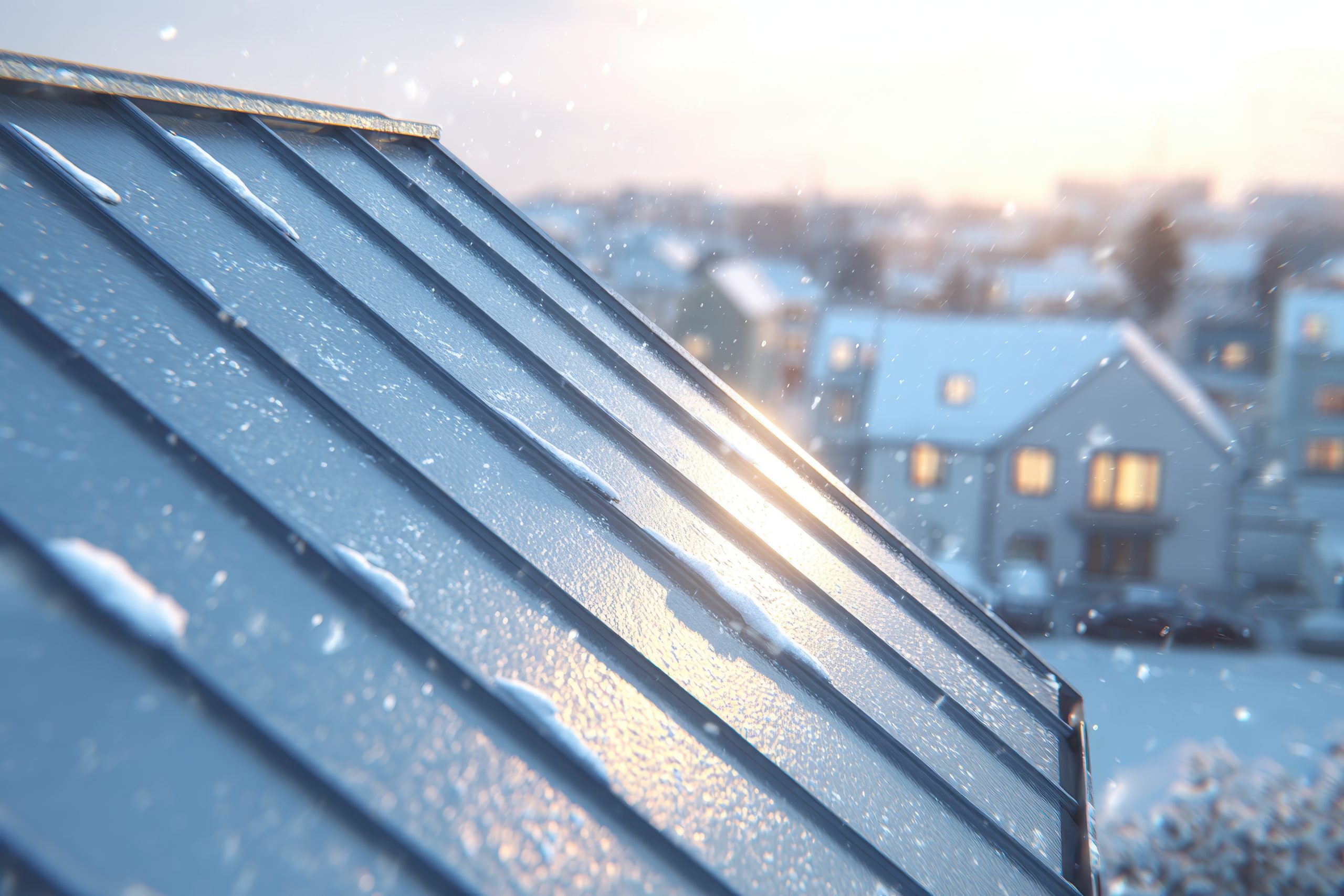
Metal roofs are known for strength and durability, but with the right insulation system, they can also significantly reduce winter heating costs.
1. How Insulation Works With Metal Roofing
Metal alone is not an insulator — it transfers temperature quickly. That’s why proper insulation underneath is essential for maintaining a consistent indoor temperature.
2. Benefits of Proper Metal Roof Insulation in Winter
A. Improved Energy Efficiency
Good insulation traps heat, reducing furnace workload.
This leads to lower heating bills and better long-term energy performance.
B. Reduced Condensation
Warm indoor air meets cold metal surfaces = condensation risk.
Insulation minimizes this temperature shock.
C. Noise Reduction
Insulation absorbs sound, reducing winter wind noise.
D. Better Roof Longevity
A well-regulated thermal environment reduces freeze–thaw stress on the roof system.
3. Types of Insulation Commonly Used With Metal Roofs
- Fiberglass batts
- Rigid foam board
- Spray foam insulation
- Metal building insulation (MBI)
Each offers unique benefits based on application.
4. Pairing Insulation With Ventilation
Insulation alone is not enough—ventilation must work with it.
Proper airflow prevents:
- Ice dams
- Condensation
- Mold
- Heat loss
Combine insulation with ridge venting and closure foam for best results.
Conclusion
With the right insulation and ventilation strategy, metal roofs offer industry-leading winter comfort and energy savings. Homeowners looking to lower heating bills should ensure their roof system includes adequate insulation layers.