
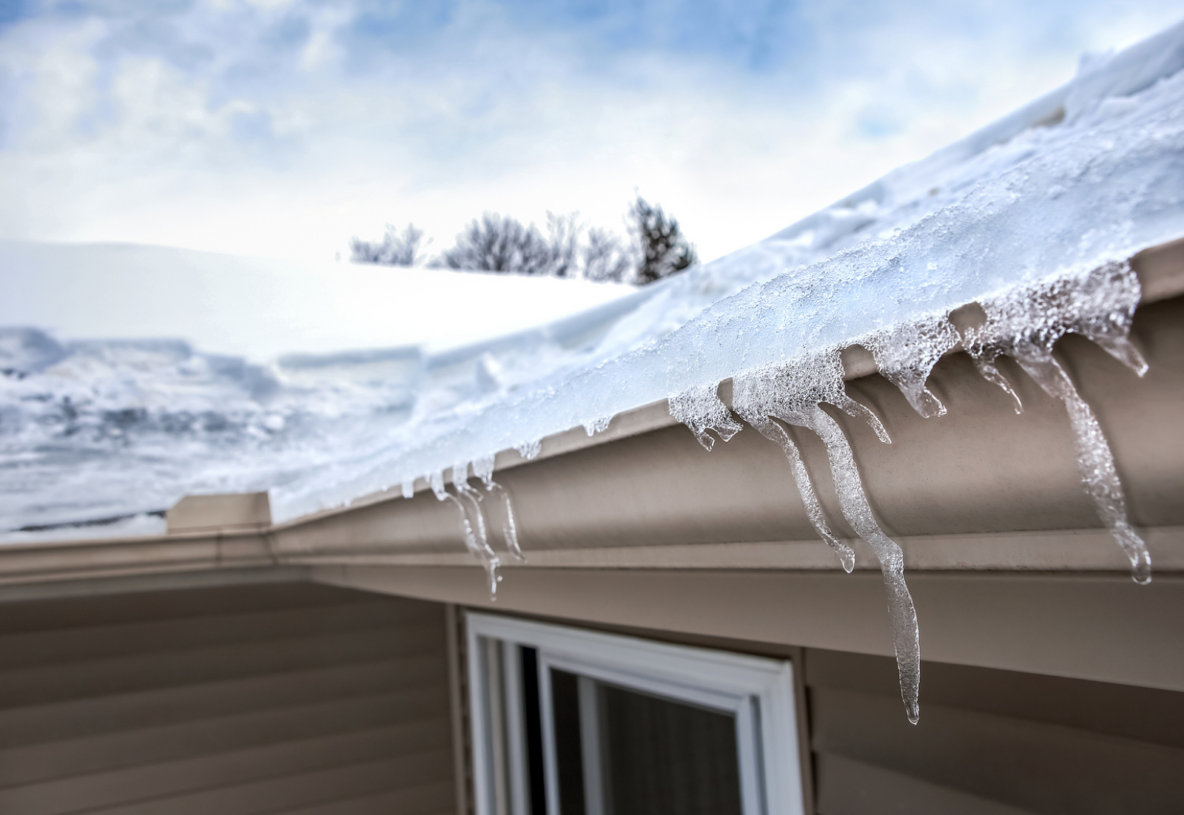
Ice dams are a common winter concern for homeowners across the Midwest. While metal roofs naturally resist many of the issues that cause ice dams, they’re not completely immune. Understanding why ice dams form—and how to prevent them—is key to keeping your home protected all winter long.
What Is an Ice Dam?
An ice dam occurs when warm air inside your home melts the snow on your roof. The melted water flows down to the colder eaves, where it freezes again. Over time, a ridge of ice forms and prevents proper drainage. The result is:
- Water backing up under roofing material
- Leaks entering the attic or exterior walls
- Damage to insulation, drywall, and siding
- Increased risk of mold growth
Why Ice Dams Are Less Common on Metal Roofs
Metal roofs perform better in winter due to their smooth surface and natural heat-shedding capabilities. Ice dams are less common because:
- Metal does not absorb heat like asphalt
- Snow slides off more easily
- Standing seam panels reduce water backup points
- Proper underlayment protects against moisture
- Metal reflects heat instead of trapping it
However, ice dams can still form if ventilation or insulation is inadequate.
Top Causes of Ice Dams (Even on Metal)
- Poor Attic Insulation
Heat escaping through the attic melts snow unevenly. - Inadequate Ventilation
Without airflow, the roof warms up—especially near the ridge. - Blocked or Undersized Ridge Venting
Moist air needs a place to escape. - Warm Spots on the Roof
Chimneys, recessed lighting, and HVAC ducts can cause localized melting. - Gutters Filled With Debris
Ice forms faster when melting snow can’t drain properly.
How to Prevent Ice Dams on Metal Roofs
1. Improve Attic Insulation
The goal is to keep heat inside your living space—not in the attic. Better insulation prevents warm air from melting snow unevenly.
2. Ensure Proper Ventilation
Ventilation is critical for winter performance. Using solutions like:
- Vented ridge (SmartVent or Throat Ventilator)
- Soffit vents
- Proper airflow channels
…helps maintain a consistent roof temperature.
3. Install High-Quality Underlayment
Peel & Stick Ice & Water Shield is a must-have in winter climates. It adds extra protection against:
- Freeze-thaw cycles
- Moisture infiltration
- Minor ice dam formations around eaves and valleys
4. Keep Gutters and Downspouts Clear
Clean gutters allow meltwater to flow freely, reducing refreeze points.
5. Use Snow Guards and Snow Retention Systems
Snow guards help maintain an even snow layer, reducing the “bare roof + heavy edge snow” effect—a key contributor to ice dam formation.
Conclusion
Ice dams can cause serious damage, but with a properly installed metal roof, good ventilation, strong insulation, and strategic snow management, they’re entirely preventable. If your metal roof isn’t performing as well as it should during winter, it may be time for an inspection or a few simple upgrades.