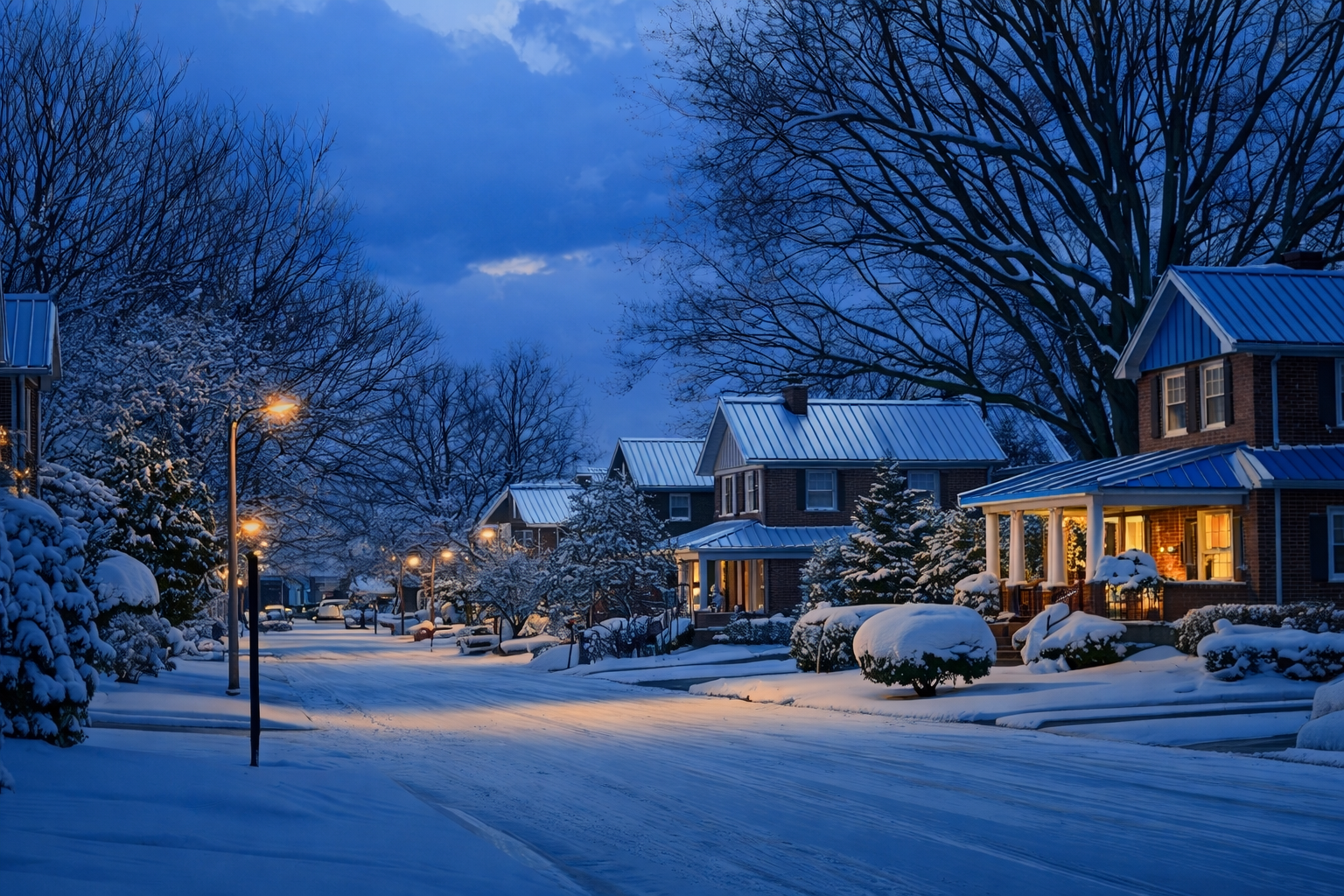
As temperatures plunge to below zero and high speed wind speeds, roofing systems across the Midwest are tested in ways most climates never experience. These conditions expose the weak points in traditional roofing materials—especially asphalt shingles—and highlight why metal roofing consistently outperforms shingle roofs in extreme weather.
When winter turns severe, performance isn’t about appearance. It’s about whether your roof stays in place, stays sealed, and continues protecting the structure below.
What Extreme Cold Really Does to Shingle Roofs
Asphalt shingles rely heavily on adhesives and flexible materials—both of which struggle in deep cold.
Shingle Roof Failures in Sub-Zero Conditions
- Adhesive strips lose bonding strength, increasing the risk of blow-offs
- Shingles become brittle, making them prone to cracking and tearing
- Wind-driven uplift can easily break weakened tabs
- Ice dams trap moisture under shingles, accelerating deterioration
At Sub-zero Temperatures, shingles are no longer flexible—they are fragile.
Why Metal Roofing Performs Better in Extreme Cold
Metal roofing systems are engineered differently. They rely on mechanical attachment, not adhesives, and are designed to handle wide temperature swings.
Metal Roof Advantages in Severe Winter Weather
- No adhesive dependency – Cold temperatures do not compromise panel attachment
- High wind resistance – Properly installed metal panels are rated for extreme uplift
- Consistent performance – Metal remains structurally stable in sub-zero temperatures
- Efficient snow shedding – Smooth panel surfaces reduce snow and ice buildup
Instead of failing in the cold, metal roofing continues to perform as designed.
Wind Performance: Where the Difference Is Most Obvious
High winds expose one of the biggest contrasts between metal roofs and shingles.
Shingles in high speed winds
- Individual shingles lift and peel
- Once one shingle fails, surrounding shingles are compromised
- Wind-driven rain can penetrate exposed underlayment
Metal Roofing high speed winds
- Panels are interlocked and mechanically fastened
- Wind loads are distributed across the roof system
- Fewer seams and penetrations reduce failure points
Metal roofing behaves as a system. Shingles behave as individual components—and that difference matters in a wind event.
Fasteners: A Critical Advantage for Metal Roofing
Metal roofing fasteners are specifically engineered for severe environments.
Why Metal Fasteners Outperform Shingle Attachment
- Steel fasteners remain stable in extreme cold
- EPDM or neoprene washers maintain a weather-tight seal
- Fasteners are designed to resist uplift, vibration, and thermal movement
Shingle roofs, by contrast, rely on:
- Short nails
- Adhesive sealing
- Overlapping materials that weaken over time
When winds increase, mechanical attachment wins.
Maintenance: Less Risk, More Predictability
Both roofing systems require maintenance—but metal roofs are far more forgiving.
Metal Roof Maintenance Benefits
- Issues are visible and easy to inspect
- Fasteners can be re-tightened or replaced
- Panels rarely need replacement
Shingle Roof Maintenance Challenges
- Damage is often hidden until leaks appear
- Repairs require matching materials
- Cold-weather repairs are limited or impossible
In extreme winter conditions, predictability and serviceability matter.
The Bottom Line: Winters Demand Metal
Extreme cold and high winds don’t just challenge roofing materials—they expose their weaknesses. Asphalt shingles are simply not designed for repeated exposure to deep cold, high wind, and heavy snow loads.
Metal roofing stands apart because it:
- Does not rely on adhesives
- Maintains structural integrity in sub-zero temperatures
- Resists wind uplift as a unified system
- Requires less reactive maintenance
When conditions are at their worst, metal roofs don’t just survive—they perform.
Preparing for Extreme Weather Starts at the Roof
If your roof is expected to withstand Midwest winters year after year, material choice matters. Metal roofing continues to prove why it’s the most reliable long-term roofing solution for extreme climates.