
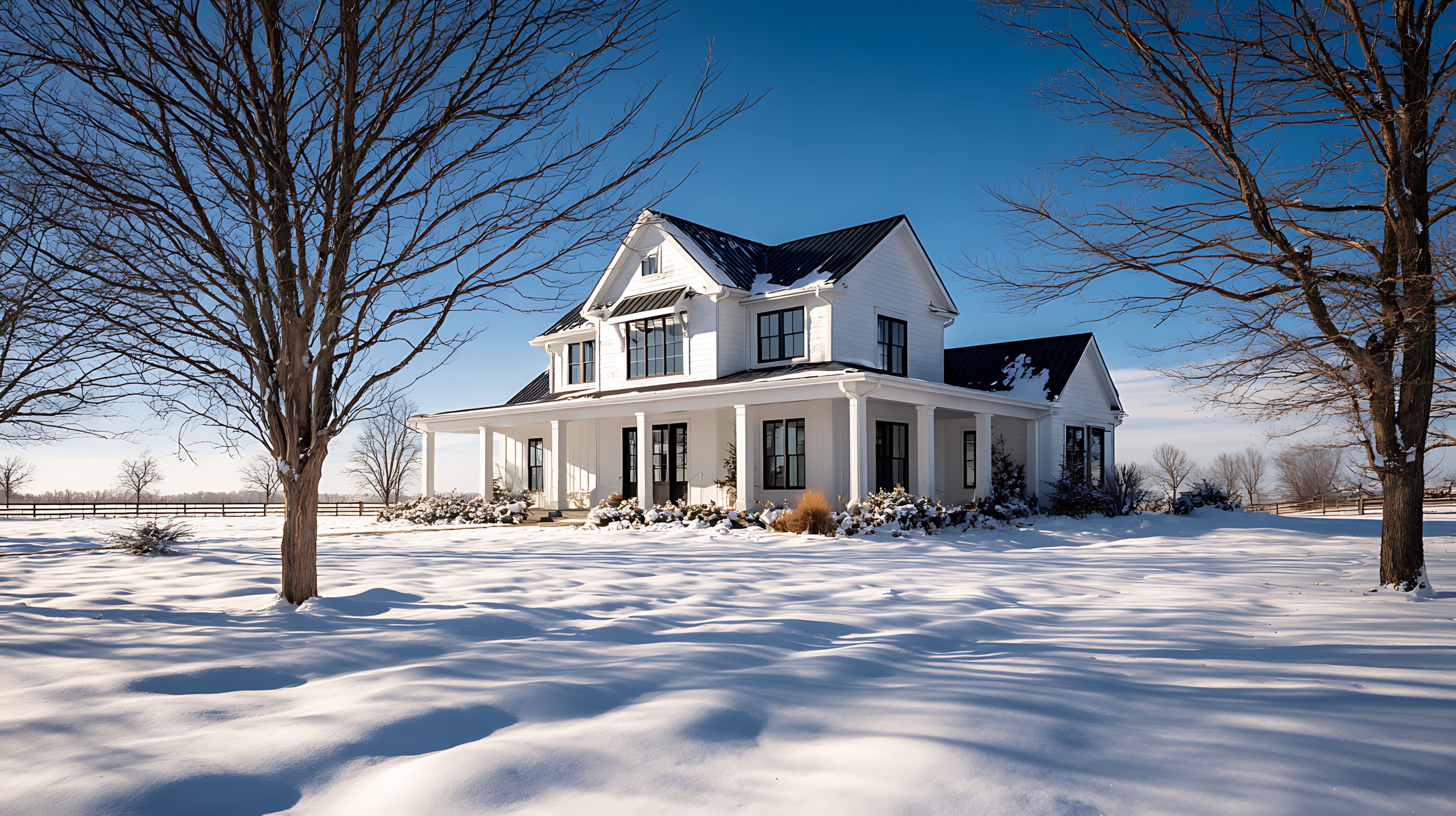
Winter in the Midwest is no joke — heavy snow, ice storms, sub-zero temperatures, and strong winds can test the limits of any roofing system. Fortunately, metal roofs are built to thrive in these conditions. Whether you’re a homeowner looking for durability or a contractor helping customers choose the right roofing system, here’s why metal roofing consistently outperforms traditional options in the winter months.
1. Natural Snow Shedding Reduces Roof Load
Snow accumulation is one of the biggest risks during winter.
Metal’s smooth surface and low friction help snow slide off naturally, reducing:
- Excess weight on trusses
- Risk of structural stress
- Potential roof leaks from melting and refreezing
This natural shedding also helps prevent dangerous buildup that can lead to sudden snow slides — which is where snow guards come in (more on that later).
2. Excellent Ice Dam Resistance
Ice dams form when heat escapes the attic, melts snow, and causes water to refreeze at the eave. Unlike other materials:
- Metal roof surfaces do not absorb water
- Panels stay colder, reducing melt-refreeze cycles
- Standing seam systems (FF100, FF150, SS200) offer fewer places for water to back up
Combine this with proper underlayment like Peel & Stick Ice & Water Shield, and you have one of the best defenses against winter leaks.
3. No Cracking, Curling, or Weather-Damage
Asphalt shingles can crack, become brittle, or blow off in cold temperatures.
Metal panels, on the other hand:
- Stay stable in sub-zero temps
- Resist breakage from hail or ice
- Maintain durability for decades
- Perform reliably in freeze-thaw cycles
Metal roofing is engineered to handle extremes — perfect for the Midwest.
4. High Wind Resistance During Blizzards
Windstorms and blizzards routinely bring 40–60 mph gusts.
Metal roofs are designed to withstand:
- High uplift forces
- Driving snow
- Sideways rain or ice pellets
Standing seam systems, when properly fastened, offer exceptional structural performance in these conditions.
5. Winter Energy Efficiency
Metal roofing reflects heat back into the home during winter. With proper insulation and ventilation, you can significantly reduce heat loss. Pairing metal roofing with:
- Metal insulation
- Vented ridge systems
- Smart closure foam
…creates a high-performance, energy-efficient system all winter long.
6. Snow Guards: The Final Piece of a Winter-Ready Roof
Metal roofs shed snow quickly — sometimes too quickly.
Snow guards help:
- Prevent large sheets of snow from sliding off at once
- Protect gutters, vehicles, walkways, and landscaping
- Keep entryways safe
- Allow snow to melt gradually and drain properly
Conclusion
For Midwest winters, metal roofing offers unmatched performance, safety, and longevity. Its ability to resist ice, shed snow, withstand wind, and maintain structural integrity makes it one of the smartest roofing investments a homeowner can make.
If you’re preparing for winter or planning a new roof in the spring, now is the perfect time to explore metal roofing options engineered to perform when it matters most.