
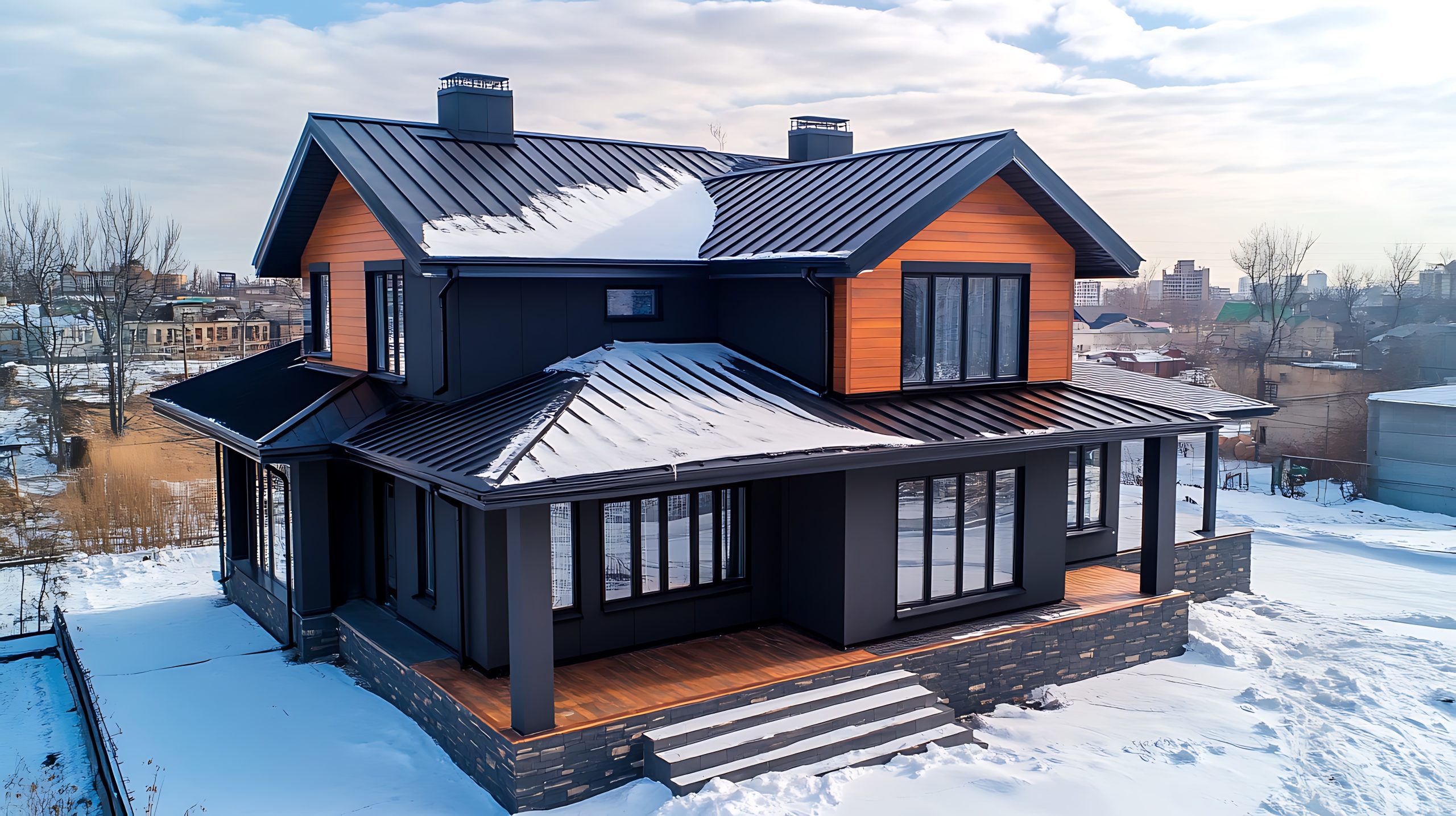
Metal roofs require far less upkeep than asphalt shingles, but winter weather still brings challenges that owners should be prepared for. A few small maintenance habits can extend roof life, prevent damage, and keep your home protected during the coldest months.
1. Inspect for Debris Before and After Snowstorms
Leaves, branches, and debris can prevent proper water flow. Over time, snow and ice can push this debris into the panel ribs or gutters, causing blockages.
Check for:
- Debris along valleys
- Blocked gutters
- Sticks trapped between ribs
2. Monitor Snow Buildup
Metal roofs shed snow naturally, but extremely heavy snowfall can overwhelm even the best systems.
If snow piles up:
- Use a roof rake with a non-abrasive head to remove excess snow
- Never use a metal shovel
- Avoid chipping ice directly from panels
- Stay on the ground — don’t climb onto the roof
Improper snow removal is a leading cause of panel damage.
3. Inspect Fasteners and Flashing
Cold temperatures can cause materials to expand and contract.
Check for:
- Loose or missing fasteners on exposed-fastener systems
- Worn pipe boots
- Lifted flashing around chimneys or vents
- Sealant showing cracks or gaps
Standing seam roofs are less affected, but flashings should still be inspected annually.
4. Watch for Ice Formations Around Eaves
Small icicles are normal, but large ice formations may indicate:
- Poor drainage
- Excess attic heat
- Blocked gutters
Addressing these issues early prevents leaks and structural damage.
5. Maintain Ventilation and Attic Conditions
Proper airflow prevents:
- Ice dams
- Excess condensation
- Warm rooftop areas that melt snow unevenly
Use ridge vents, soffit vents, and continuous airflow to balance attic temperature.
6. Install or Inspect Snow Guards
If your roof doesn’t have snow guards — or they’re installed incorrectly — winter hazards increase dramatically. Snow guards are essential for:
- Protecting gutters
- Preventing snow slides
- Reducing ground-level danger near walkways and driveways
Conclusion
Metal roofs are built to handle winter weather, but a little routine maintenance goes a long way. By monitoring snow, maintaining attic airflow, and checking fasteners and flashings, homeowners can ensure their roof performs at its best through every winter storm.